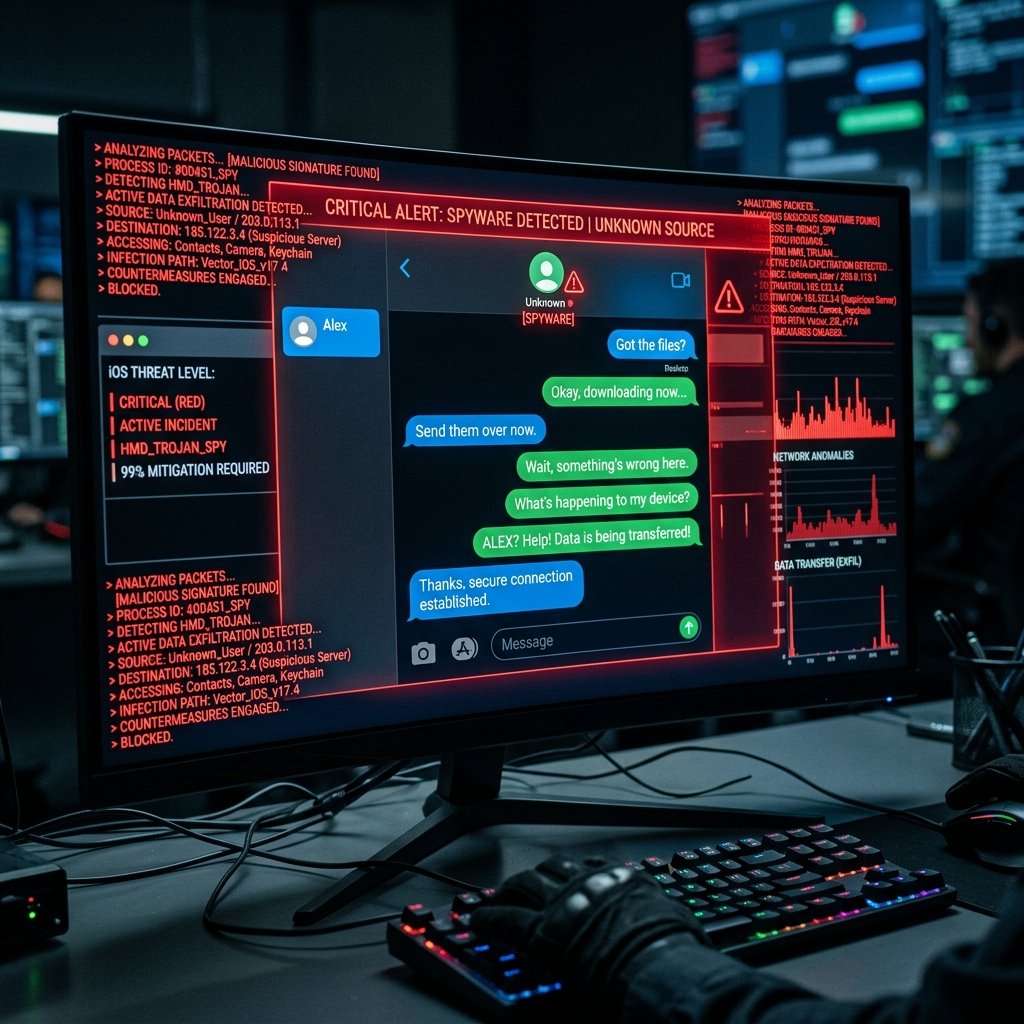
iMessage Investigation — Recovery, Analysis & Evidence
For Apple users, iMessage is the central hub of their digital life. The blue bubble represents a closed ecosystem, synonymous with security, end-to-end encryption, and seamless integration across Macs, iPads, and iPhones.
What People Really Want to Know About iMessage
For Apple users, iMessage is the central hub of their digital life. The blue bubble represents a closed ecosystem, synonymous with security, end-to-end encryption, and seamless integration across Macs, iPads, and iPhones.
Because iMessage is built deeply into the core operating system, it is considered highly secure against standard network interception. However, this same deep integration makes it a primary target for the most sophisticated spyware on the planet.
When an investigator analyzes iMessage, they aren't just looking at a standalone app; they are forensically dissecting the communication backbone of the Apple ecosystem.
How iMessage Stores and Deletes Data
iMessage security relies on a complex Public Key Infrastructure (PKI). When you activate iMessage, your device generates a unique pair of cryptographic keys (public and private).
The private key never leaves your physical device. It is stored securely in the iOS Keychain, protected by the Secure Enclave. When a message is sent to you, it is encrypted using your public key, and it can ONLY be decrypted by the specific device holding the private key.
Locally, iMessages (and standard SMS/MMS messages) are stored in a massive, centralized SQLite database known as `sms.db`. This file is the holy grail of iOS forensics. It contains the text, timestamps, read receipts, and metadata for every message sent or received on the device.
Media attachments (photos, videos, voice notes) are stored separately in the `Attachments` folder, with their file paths referenced inside the `sms.db` database.
- End-to-End Encrypted (E2EE): Apple cannot read iMessages in transit.
- The sms.db Database: The central repository for all messaging data on iOS.
- Keychain Security: Decryption keys are bound to the device's hardware.
- Multi-Device Sync: iCloud synchronization creates secondary access points across Macs and iPads.
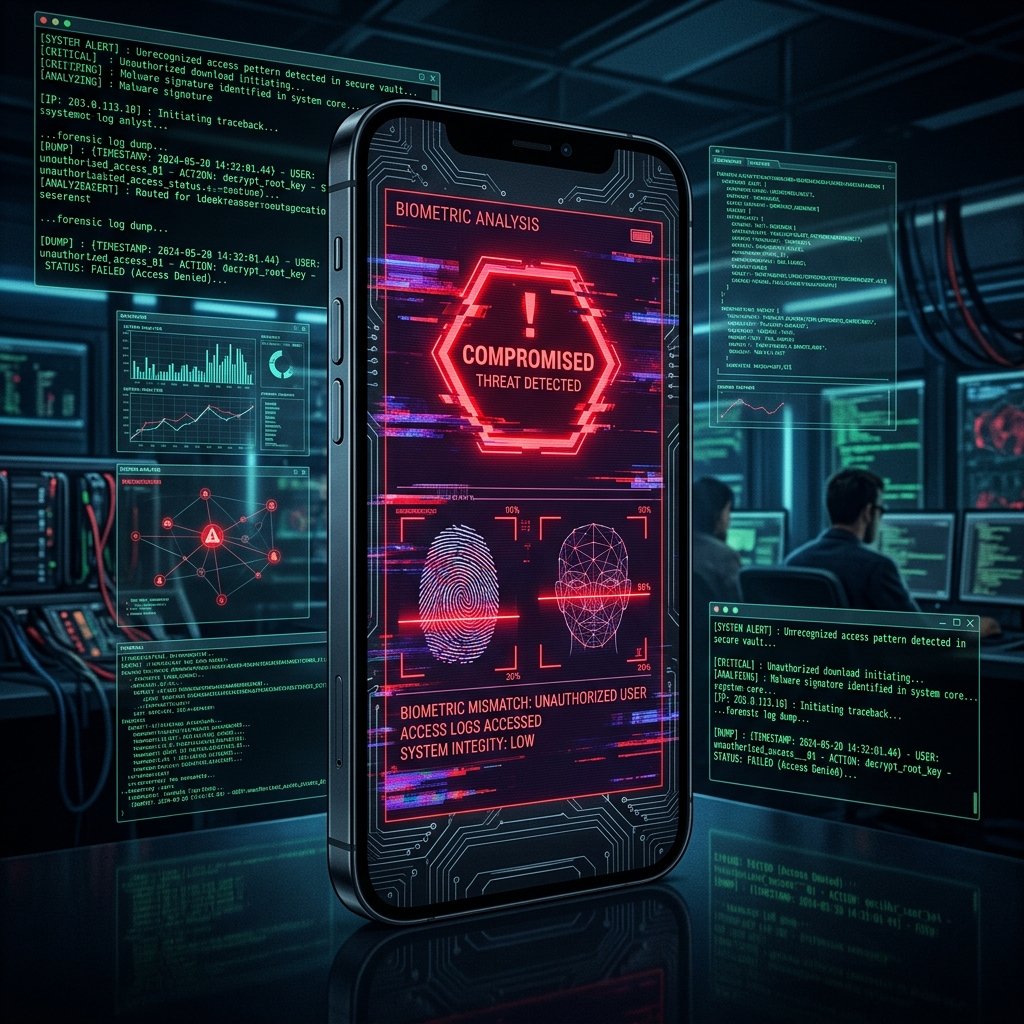
What Is Recoverable — and What Is Not
iMessage recovery is one of the most reliable processes in mobile forensics, provided the device has not been wiped.
Recently Deleted Messages: In recent iOS versions, Apple introduced a 'Recently Deleted' folder that holds messages for 30 days. These can be easily recovered directly from the UI.
Permanently Deleted Messages: If a user deletes a message and then clears the 'Recently Deleted' folder, the data is removed from the active `sms.db`. However, SQLite databases do not immediately zero out deleted data. A Full File System (FFS) extraction allows forensic analysts to parse the SQLite unallocated space and the Write-Ahead Log (WAL) file, frequently recovering iMessages that were deleted months ago.
iCloud Backups: This is the largest vulnerability. Even though iMessages are E2EE in transit, if a user utilizes standard iCloud Backups, the `sms.db` is backed up to Apple's servers using a key controlled by Apple. If law enforcement subpoenas Apple, or if a hacker compromises the user's Apple ID, they can download the backup and read the entire iMessage history.
iCloud Sync (Messages in iCloud): If 'Messages in iCloud' is enabled, the E2EE keys are synced across the user's trusted devices. If an attacker gains access to the user's Mac or iPad, they can read the full iMessage history, even if the primary iPhone is locked and secure.
Our iMessage Investigation Methodology
Our iMessage investigation methodology focuses on extraction, database carving, and securing the broader Apple ID ecosystem.
First, we secure the Apple ID. We audit the 'Trusted Devices' list in the iOS Settings. Spyware or a suspicious partner will often covertly log a secondary device (like an old iPad or a Mac) into the target's Apple ID. Because iMessage syncs seamlessly, the attacker can silently read every message in real-time from the secondary device.
Second, we perform a deep extraction of the iPhone. While logical extractions (like iTunes backups) pull the active `sms.db`, we aim for a Full File System extraction (via tools like checkm8 or advanced forensic agents) to access the raw flash memory and SQLite WAL files to recover permanently deleted communications.
Third, we hunt for zero-click spyware. High-tier threats like Pegasus frequently target iMessage to gain initial access to the device (e.g., sending a malicious PDF via iMessage that silently executes code). We analyze the device's `sysdiagnose` logs and `DataUsage.sqlite` for anomalous background processes interacting with the `MobileSMS` daemon.
Finally, we cross-reference the iMessage data with the iOS `KnowledgeC` and `PowerLog` databases to prove when messages were read and when the application was in the foreground.
Platform-Specific Considerations
Advanced Data Protection (ADP): If a user enables ADP for iCloud, their iCloud backups are End-to-End Encrypted using a key derived from their device passcode. Apple no longer holds the key. In this scenario, downloading a cloud backup is useless without the user's physical device passcode.
The Green Bubble Fallback: If iMessage fails, it falls back to a standard SMS text message (the green bubble). SMS is completely unencrypted and can be intercepted by carrier spoofing or SS7 attacks, bypassing the iMessage encryption entirely.
Frequently Asked Questions
Related Recovery Services
$ Open a secure channel. PGP preferred. Pre-engagement NDA available on request. Ready to proceed?
[ INITIATE SECURE CONTACT ]