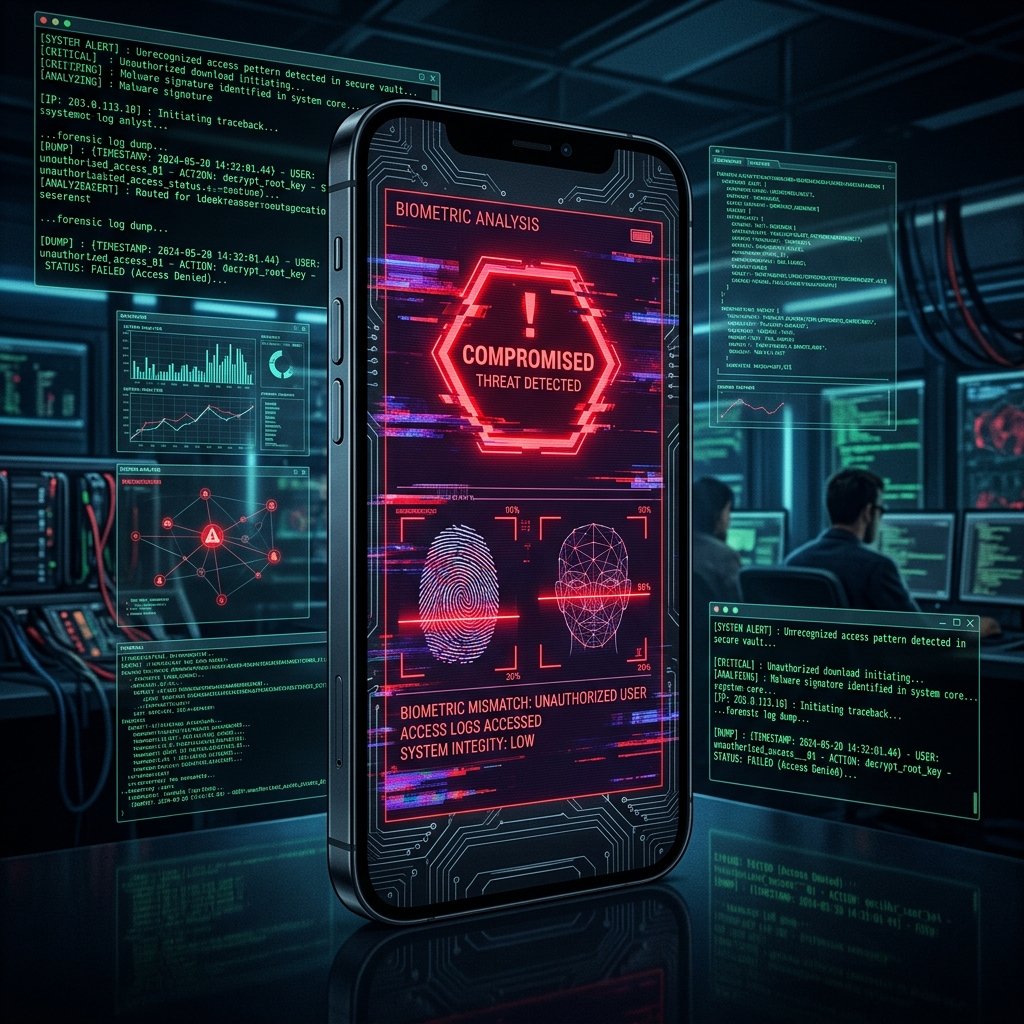
Samsung Galaxy S24 Ultra — Spyware Detection & Forensic Analysis
The Samsung Galaxy S24 Ultra is the apex of Android hardware. Packed with AI-driven features and protected by the highly touted Samsung Knox security framework, it is a formidable device for forensic examiners.
Samsung Galaxy S24 Ultra: What Makes It a Target
The Samsung Galaxy S24 Ultra is the apex of Android hardware. Packed with AI-driven features and protected by the highly touted Samsung Knox security framework, it is a formidable device for forensic examiners.
However, the massive feature set—specifically the deep integration of Google AI, Samsung's proprietary cloud services, and complex hardware virtualization—creates a vast and convoluted attack surface.
When investigating an S24 Ultra, we are not just analyzing standard Android; we are analyzing a deeply customized, proprietary operating system designed explicitly to thwart unauthorized extraction.
Samsung Galaxy S24 Ultra Security Architecture
The cornerstone of the S24 Ultra's defense is Samsung Knox. Knox is not just software; it is a defense-grade security architecture baked into the silicon.
Knox utilizes a 'TrustZone' architecture (ARM TrustZone) to isolate critical cryptographic operations. It employs Real-Time Kernel Protection (RKP) to actively monitor the OS kernel. If RKP detects unauthorized tampering (like a rooting attempt), it permanently trips a hardware fuse (the Knox Warranty Void bit).
Once the Knox fuse is tripped, the device permanently locks the user out of Secure Folder, Samsung Pay, and Samsung Pass, destroying the cryptographic keys associated with those services to protect the data.
Furthermore, the S24 Ultra employs File-Based Encryption (FBE) utilizing AES-256. Without the correct lock screen passcode, the `userdata` partition is mathematically inaccessible, rendering brute-force attacks via traditional recovery modes useless.
- Samsung Knox: Defense-grade, hardware-backed security framework.
- Real-Time Kernel Protection (RKP): Thwarts rooting and unauthorized kernel modifications.
- Hardware Fuse (e-fuse): Permanently disables secure services if tampering is detected.
- Secure Folder: A highly encrypted, mathematically isolated container for sensitive apps and data.
Forensic Analysis Capabilities for Samsung Galaxy S24 Ultra
Forensic extraction on the Galaxy S24 Ultra is heavily reliant on the passcode and the specific patch level.
Logical Extraction: With the passcode, we can perform standard ADB (Android Debug Bridge) backups and utilize tools like Cellebrite to pull active app data, photos, and Call/SMS logs.
Bypassing Knox (Physical Extraction): Obtaining a Full File System (FFS) extraction on an S24 Ultra is extremely difficult due to Knox. We rely on advanced bootloader vulnerabilities (like EDL mode exploits for Qualcomm chipsets, if available) or highly complex, proprietary forensic agents that exploit the Exynos/Snapdragon architecture to dump the memory without tripping the Knox fuse.
Secure Folder Forensics: If the user utilizes the 'Secure Folder', we must obtain the secondary passcode for that specific container. The data inside is encrypted with a distinct key. However, if the device is unlocked, we can sometimes capture the decrypted data in RAM before the container locks.
Common Threats Targeting This Device
The primary threats to the S24 Ultra circumvent its hardware security by attacking the user or the application layer.
Accessibility Service Abuse: This is the most common Android threat. A user is tricked into installing a benign-looking app (like a PDF reader) and granting it 'Accessibility' permissions. The app then uses these permissions to literally read the screen, capture keystrokes, and interact with the UI, completely bypassing Knox's kernel protections.
Sideloaded APKs: Android allows users to install apps outside the Google Play Store. Attackers frequently use social engineering to convince a target to sideload a malicious APK containing an advanced Remote Access Trojan (RAT).
Cloud Compromise: Attackers often target the Samsung Cloud or Google account linked to the device, quietly pulling backups of SMS, contacts, and photos without ever touching the physical phone.
Our Assessment Approach
Our investigation of the S24 Ultra requires a deep dive into the Android application layer and Samsung's specific service logs.
We first audit the device's 'Accessibility' and 'Device Admin' permissions, immediately flagging any unauthorized applications holding these critical privileges.
We extract the `UsageStats` XML files and the `dumpsys` logs to build a granular timeline of application activity, identifying hidden processes running in the background.
If a deep extraction is required, we utilize specialized EDL (Emergency Download Mode) techniques tailored to the specific Snapdragon or Exynos chipset variants to safely extract the raw flash memory.
Frequently Asked Questions
Related Recovery Services
$ Open a secure channel. PGP preferred. Pre-engagement NDA available on request. Ready to proceed?
[ INITIATE SECURE CONTACT ]