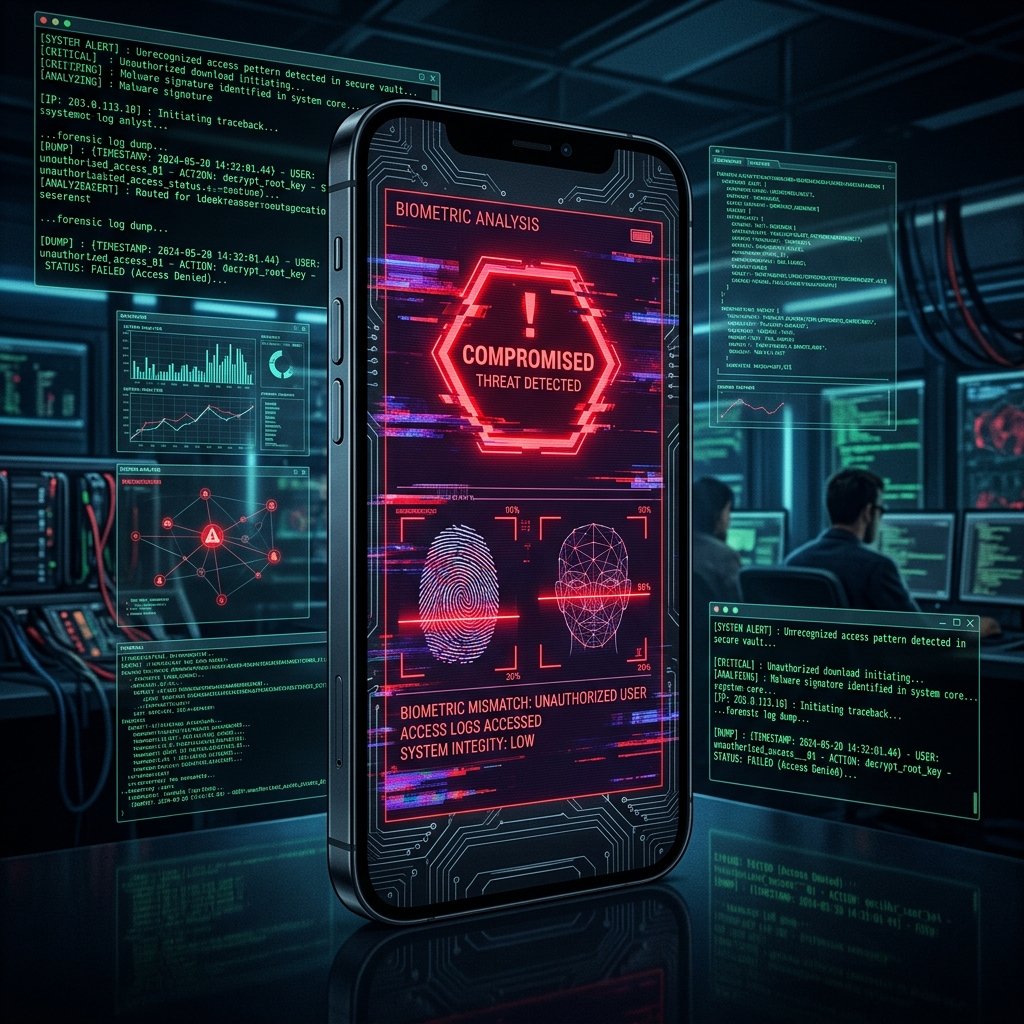
Samsung Galaxy S23 — Spyware Detection & Forensic Analysis
The Samsung Galaxy S23 series, standardized globally on the Qualcomm Snapdragon 8 Gen 2 processor, is a powerhouse device. It is universally deployed in corporate environments and by millions of consumers.
Samsung Galaxy S23: What Makes It a Target
The Samsung Galaxy S23 series, standardized globally on the Qualcomm Snapdragon 8 Gen 2 processor, is a powerhouse device. It is universally deployed in corporate environments and by millions of consumers.
Because it is slightly older than the newest flagship, it exists in a 'sweet spot' for forensic examiners. Threat actors have had more time to develop tailored malware for it, and forensic companies have had more time to develop extraction exploits.
When conducting a spyware scan on an S23, we focus heavily on the interaction between third-party apps and the core Android OS, as this is the primary attack vector.
Samsung Galaxy S23 Security Architecture
The S23 relies on Samsung Knox, just like its successor. However, the uniformity of the Snapdragon 8 Gen 2 chipset across all regions (unlike previous models which split between Snapdragon and Exynos) created a unified target for both security researchers and hackers.
The device heavily utilizes Android's 'Scoped Storage'. This prevents applications from freely browsing the entire file system. An app can only access its own sandbox and specific, user-approved media directories.
To bypass Scoped Storage, malware must elevate its privileges. It does this by tricking the user into granting 'All Files Access' (MANAGE_EXTERNAL_STORAGE) or by exploiting a local privilege escalation (LPE) vulnerability in the kernel.
Authentication is secured by the Qualcomm Trusted Execution Environment (TEE), which handles biometric matching (ultrasonic fingerprint) and secure key generation.
- Snapdragon 8 Gen 2: Unified global architecture simplifies both attack and defense strategies.
- Scoped Storage: Strict Android OS-level restrictions on file system access.
- Qualcomm TEE: Hardware-isolated environment for processing biometrics and encryption keys.
- Samsung Message Guard: Introduced on the S23 series to quarantine and sanitize image attachments, mitigating zero-click exploits.
Forensic Analysis Capabilities for Samsung Galaxy S23
Our capabilities on the Galaxy S23 are extensive, utilizing both logical and physical extraction methods.
Advanced Logical Extraction: Utilizing ADB (Android Debug Bridge) or specialized forensic agents (like the Cellebrite Smart agent), we can pull the APKs (application files) of all installed software, allowing us to reverse-engineer suspicious apps to determine their true function.
Physical Extraction via EDL: If the S23 is running a specific, exploitable bootloader version, we can force the device into Qualcomm's Emergency Download (EDL) mode. Using custom 'firehose' loaders, we can bypass the OS entirely and image the raw flash memory, allowing for deep file carving and recovery of deleted SQLite databases.
RAM Dumps: If the device is unlocked and rooted (or if a temporary root exploit is available), we can capture the volatile memory (RAM) to extract encryption keys for apps like Signal or WhatsApp before they are cleared from memory.
Common Threats Targeting This Device
The S23 is a frequent target for highly sophisticated Android banking trojans and stalkerware.
Banking Trojans (e.g., Octo, Xenomorph): These advanced threats wait until the user opens a banking app. They then overlay a fake login screen on top of the real app to steal credentials, or they use Accessibility Services to perform automated transfers.
Hidden 'Vault' Apps: Spouses or employees frequently use apps disguised as calculators or calendars to hide illicit photos or communications. Because Android allows deeper customization than iOS, these apps are highly prevalent.
Permissions Abuse: The most common threat is simple user error—granting a flashlight app access to the microphone, camera, and contacts.
Our Assessment Approach
Our S23 investigation is a meticulous audit of the Android permission matrix and network activity.
We extract the `packages.xml` file, which acts as the master registry of every app on the device and the exact permissions they hold. We flag any app holding `BIND_ACCESSIBILITY_SERVICE` or `BIND_DEVICE_ADMIN`.
We utilize static analysis tools (like `APKTool` or `JADX`) to decompile suspicious applications found on the device, analyzing their source code to identify malicious webhooks or data exfiltration routines.
Finally, we analyze the Android `Notification History` logs, which often retain the text of WhatsApp or Signal messages even after they have been deleted or have 'disappeared'.
Frequently Asked Questions
Related Recovery Services
$ Open a secure channel. PGP preferred. Pre-engagement NDA available on request. Ready to proceed?
[ INITIATE SECURE CONTACT ]