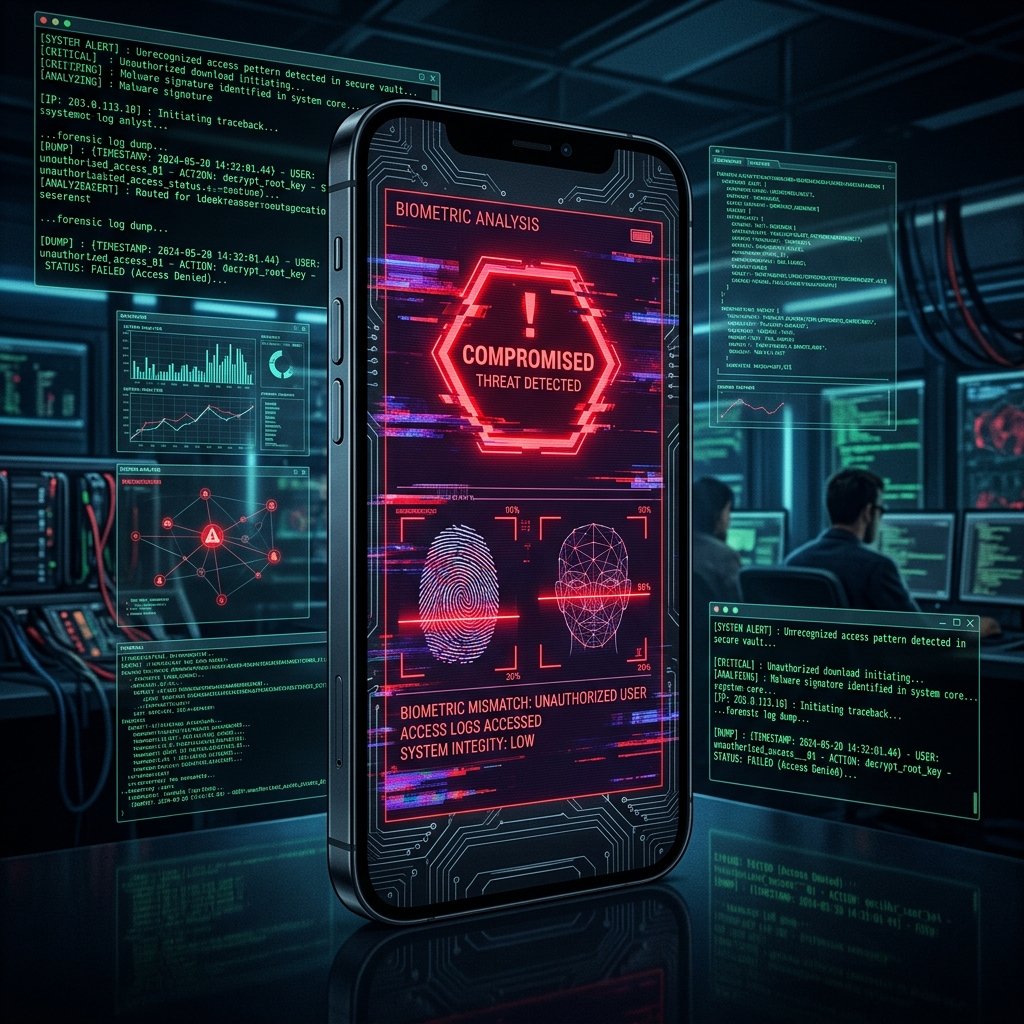
Google Pixel 8 Pro — Spyware Detection & Forensic Analysis
The Google Pixel 8 Pro is the purest representation of Android security. Designed entirely by Google, it integrates the custom Tensor G3 chip and the Titan M2 security coprocessor.
Google Pixel 8 Pro: What Makes It a Target
The Google Pixel 8 Pro is the purest representation of Android security. Designed entirely by Google, it integrates the custom Tensor G3 chip and the Titan M2 security coprocessor.
It is widely considered one of the most secure smartphones available, specifically engineered to defend against physical tampering and advanced exploitation.
When investigating a Pixel 8 Pro, we are analyzing a device that actively fights back against forensic extraction techniques.
Google Pixel 8 Pro Security Architecture
The security model of the Pixel 8 Pro is built on hardware-backed verification.
The Titan M2 security chip is a physically isolated processor. It stores the encryption keys and handles the lock screen verification. It includes hardware rate-limiting; if you enter the wrong passcode too many times, the Titan M2 chip physically slows down the retry rate, making automated brute-force attacks mathematically impossible in a human lifetime.
The device uses Advanced File-Based Encryption. Furthermore, it supports 'Multiple Users' and 'Guest Mode' at the hardware level, cleanly isolating data between different profiles.
The Pixel 8 Pro also benefits from Google's rapid update cycle. It receives kernel patches and security updates immediately, drastically reducing the window of opportunity for zero-day exploits compared to other Android manufacturers.
- Titan M2 Coprocessor: Hardware-isolated security chip resistant to physical tampering and brute-forcing.
- Tensor G3: Advanced AI chip with built-in hardware security mitigations.
- Rapid Patch Cycle: Receives immediate security updates directly from Google.
- Verified Boot: Ensures the operating system has not been modified by rootkits.
Forensic Analysis Capabilities for Google Pixel 8 Pro
The Pixel 8 Pro presents a massive challenge for deep forensic extraction.
Physical Extraction is Rare: Because the Titan M2 chip effectively neutralizes brute-force attacks and prevents downgrade attacks, obtaining a Full File System (FFS) or Physical extraction without the passcode is virtually impossible using commercial tools.
Logical Extraction (With Passcode): If the passcode is known, the Pixel is highly cooperative. We can utilize standard ADB protocols to perform a comprehensive logical backup.
Cloud Forensics: Because the Pixel is so deeply integrated with Google services, the most effective 'extraction' is often performing a forensic acquisition of the associated Google Account (Google Takeout). This frequently yields more historical location data, search history, and app usage data than the physical device itself.
Common Threats Targeting This Device
Because the hardware is so secure, attacks against the Pixel 8 Pro focus on the user and the application layer.
Phishing & OAuth Abuse: Attackers send deceptive emails to trick the user into granting a malicious third-party app access to their Google account (OAuth token theft). This grants the attacker access to Gmail, Drive, and Photos without needing to hack the phone.
Accessibility Malware: Like all Androids, the Pixel is vulnerable to malware that tricks the user into granting Accessibility permissions, allowing the malware to screen-scrape communications.
The 'Insider Threat': A trusted individual with the passcode simply adds their fingerprint to the device or sets up a 'Guest Profile' to conduct illicit activity, isolating the evidence from the primary user's view.
Our Assessment Approach
Our investigation of a Pixel 8 Pro heavily prioritizes log analysis and cloud ecosystem auditing.
We extract the Android `dumpsys` and `bugreport` files. These massive text files contain the device's internal state, battery history, and application execution logs, allowing us to pinpoint anomalous background activity.
We audit the Google Account Security Checkup, reviewing the active sessions, third-party app permissions, and Google Dashboard activity to ensure the cloud ecosystem hasn't been silently compromised.
If a secondary user profile or 'Guest Mode' was utilized, we attempt to extract the data from that specific sandboxed environment, assuming we have the authorization and passcodes.
Frequently Asked Questions
Related Recovery Services
$ Open a secure channel. PGP preferred. Pre-engagement NDA available on request. Ready to proceed?
[ INITIATE SECURE CONTACT ]